The other I was reading a recent post from a major Costa Rica news group. It really really started me thinking. It was about the relationship between language and culture. Basically, language is responsible for every culture’s mindset. It is why we are all different and it also factors in to how well we understand another culture. That is to say it is easier to get a handle on another culture’s mindset the more of their language that we understand.
If you come to Costa Rica to live or retire it is of paramount importance to learn the language and interact with the people. As I have said before on repeated occasions and probably sound like a “scratched record” as they say in Spanish, “If you don’t know some Spanish you will always be a foreigner.” You are also increasing the chances of failure here. Don’t get me wrong! I have seen people live here for ten or twenty years without knowing the language and survive. However, they are really missing out on experiencing the best things about living in a different culture and will always be “strangers in a strange land.”
Being bicultural can makes all the difference in the world. One of the reasons I have had such a fantastic life in Costa Rica over the last thirty years is because I speak the language. All of the success I have had here is a direct result of my linguistic background. Hundreds of doors have opened for me and opportunities have presented themselves.
Cervantes said, “To know another language is to know another world.” Nothing could be truer.

- Estamos en Costa Rica
If you retire in Costa Rica and happen to understand some Spanish you will hear the phrase “Estamos en Costa Rica.” This means “We are in Costa Rica” but really has little to do with where one’s physical location.
This express is often used by Costa Ricans to explain or justify the way things in the country work, as manifested by the inefficiency in many areas. For example, if the country builds a new highway and it turns out to be poorly constructed, the locals will justify the shoddy job by saying, “Estamos en Costa Rica” to indicate that these things are endemic to the country.
Another example is if someone is applying for Costa Rican residency and the process drags on and on and the person starts complaining about the bureaucracy to the locals. The latter will say “Estamos en Costa Rica.” In other words it is to be expected because that’s the way the country operates.
There are countless examples of where this expression can be applied by Costa Ricans to describe and rationalize why things go wrong here, take very long to get done or why strange things generally occur.
As foreigners we are never going to be able to change the idiosyncrasies of Costa Rica. So, we have to adapt to them and accept them if we are going to be happy living here. I chose to write about this subject to help potential retirees be aware of the many cultural differences they will be confronted with when living here.
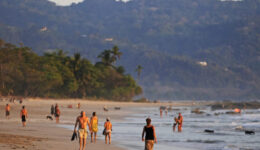
When people think of retirement in Costa Rica they often picture themselves lying on a palm-tree lined beach with a paradisical background. Living on one of Costa Rica’s pristine beaches has a lot to offer but it also has a downside you should be aware of.
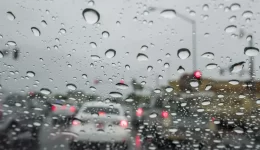
Recently the town of Nosara, located on the Pacific Northwest coast of Costa Rica, was cut off due to a few days of torrential rains. The town’s main highway was turned into a virtual river. Over three hundred people in the community had to be taken to shelters because rising water threatened their homes and their personal safety. A few secondary roads were completely destroyed and there were several minor landslides and blackouts which cut off communication with the outside world. The whole Nicoya Peninsula really got hit hard by May’s rainstorms. Costa Rica usually doesn’t experience this kind of weather until October, which is traditionally the wettest month.
So as you can see living at the beach in Costa Rica is not all fun and games. Most often infrastructure lags behind the other areas of the country. Besides occasional flooding, Internet services can be scare, the heat can be soffocating at certain times of the year, air conditioning bills can be very high, quality emergency medical care can be far away, good entertainment and groceries can be an issue as can isolation and boredom.
I personally know a lot of people who initially were very enthusiastic when they first moved to the beach to retire in Costa Rica. About eight out of ten of them have since moved to the Central Valley where there are more services, cooler weather, good medical care and more things to do to stay busy and happy. I even know a successful Costa Rican business woman tried the beach for a year but could not stand living there. She eventually moved back to the San José suburb of Rohrmoser where she is much happier.
You really have to be a certain breed of animal to live at the beach full-time. It is better to visit one of Costa Rica’s beautiful beaches for a few days on a mini-vacation and then return to your home at a higher elevation. That is what a lot of people do. Some even have second home or condo at the beach but only use it for a few days at a time.
Personally I always feel refreshed when I return from a trip to the beach and start to feel the cooler weather as I reach the Central Valley. I get an instant inject of energy from the cool breezes.
Don’t think I am against living at the beach in Costa Rica. I am just trying to paint a realistic picture of life there to help potential retirees and other make the correct decision.
As most of you know by now the term “pura vida” (pure living) is the national motto and is reflect by the Costa Rican’s laid-back and carefree lifestyle. Because of this omnipresent attitude and view of life, the people here tend to enjoy life more than we do and live in the moment. Costa Ricans were recently selected as the happiest people on earth according to a study. They also live longer than most Americans. This is probably due to the country’s “cradle to grave’ health care system and the lifestyle. Most Americans who retiree here adopt this pura vida lifestyle and usually end up living longer and happier.
Unfortunately there is a downside to the “pura vida’ lifestyle. The people here tend to procrastinate and take longer to get many things completed. At time this attitude can be frustrating to foreigners. Especially when they are trying to get things done and the ticos seem to be dragging their feet.
Pura vida can also be an excuse for general inefficiency and a pretext for not acting on important matters. Maintaining the country’s highways, combating crime, passing and enforcing traffic laws and fighting poverty and drugs use are important areas where progress is slow. An example of this indifference is the new highways which were recently completed during the Arias administration. The highway between the costal towns of Quepos and Dominical took over 40 years to complete. One administration after another delayed the construction this vital link for one reason or another.
There are countless other examples of the pura vida outlook keeping the country form being proactive and making it more reactive. All of this has combined to stunt the county’s growth. Don’t get me wrong Costa Rica is making huge strides in many areas but could probably be miles ahead if the people were a little less carefree and more responsible.
Despite all of the above I still love living here.
When you move to Costa Rica to live or retire, you will encounter a new culture. In order to to adapt and get the most out of the country it is important to learn the language and become familiar with as many aspects of the culture as you can.
One such cultural nuance is the country’s famous sobadores. This practice dates back to the old days in Costa Rica and is traditionally used by many Costa Ricans as a form of alternative medicine. Most commonly this type of procedure is used to get rid of so-called pegas or empachos which indicate that one’s digestive system is not working correctly. The main symptoms are indigestion or colitis-like pains in the abdomen. Although los sobadoders claim that headaches, fevers, nausea, la oss of appetite and even diarrhea can be alleviated by their procedures. Usually oil or hand lotion is applied to the part of the body which is going to be massaged. In the old days pig lard was used as a lubricant. Now baby oil, mineral oil, any type of hand cream or mentholated sports injury cream can be utilized.
What sobadores do is like a type of home-grown acupuncture combined with massage. Certain parts of the body are stimulated and massaged to cure symptoms in another part of the body. The parts of the body that are usually worked on are the inside of the forearms, the outside of the wrists, the calf muscles, the abdomen and the feet.
Physicians warn that if a person presents any of these digestive maladies that it is better to see a regular doctor because these problems could be a sign of a more serious condition like an intestinal occlusion or diverticulitis, etc. Doctors also claim that the treatments given by los sobadores are nothing more than a regular linfatic massage.
Anyway this all food for thought and will help you understand some of the deeply-rooted local customs during your retirement years.