Results of President Oscar Arias’ Recent Visit to China and What it Means for Costa Rica

Here is what Oscar Arias has accomplished recently with Regard to China

(1) The first Central American country to establish official relations with China

(2) First Central American president to visit the country

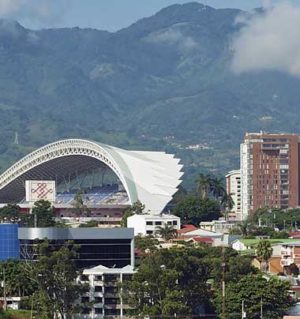
(3) China donated $48 million for disaster relief, to finish the highway Ciudad Quesada and rebuild the National Stadium.

(4) The possibility of Central America’s largest refinery to be built in Costa Rica

(5) The possibility of Chinese telecommunications companies

Energy Costs in Costa Rica’s Central Valley are Low

Last night I heard that the cost of heating oil in the States was expected to rise 22 percent this winter due to the high price of oil. In Costa Rica we don’t have to worry about heating oil because nobody needs it.

I live in the Central Valley and don’t have air conditioning or heaters in my house. The area where I reside is called Heredia. At certain times of the year it can get cold but I have never used more than two light blankets at night. I can’t even use the leather jacket I brought from the States.

In March and April it can get warm in the Central Valley but I have never felt the need to have air conditioning in my home. The beach is another story because it can get very hot and humid. But if you have to have to air conditioning the cost of electricity here is much lower than the United States. My electric bill usually runs about $25 to $30 per month. At the beach you might have to pay twice or three times that if you run your air conditioner all day.

Costa Rican Postmen Have it hard

Pity the poor Costa Rican postman. Sure, he doesn’t have to deal with sleet or snow. But consider what passes for an address here:

From the Tibas cemetery, 200 meters south, 300 meters west, cross the train tracks, white two-story house.

That’s actually a pretty easy one. Making his rounds on the outskirts of this capital city one recent morning, carrier Roberto Montero Reyes pulled envelopes from his canvas sack whose addresses read like treasure-hunt clues or lines of haiku.

There was one for someone who lived on “the south side of the Red Cross” and another for a family whose home is “125 meters [410 feet] west of the Pizza Hut.”

“You’ve got to be a mind reader, . . . a historian and a detective” to do this job, said Montero, a 27-year veteran, who walks his route in camouflage-print sneakers.

It may be difficult for GPS addicts to comprehend, but Costa Rica doesn’t have a standardized system of addresses — at least not ones that can be typed into MapQuest. Many streets aren’t named, and virtually none have signs. Many houses don’t have numbers. Only a few pockets of the country use anything close to the “123 Main St.” format that Americans would recognize.

Instead, most Costa Rican addresses are expressed in relation to the closest community landmark. In colonial times, that was the church or town hall. Today it could be a fast-food joint or car dealership.

For some, the quirky system is a reassuring link to their country’s agrarian past, a colorful affirmation of what it means to be “Tico,” or Costa Rican. Almost everyone beams when they talk about the “old fig tree” and the “old Coca-Cola plant.” Both of those San Jose-area landmarks have been lost to history, but locals still cite them when giving directions as if they still existed. For a disoriented visitor, it’s proof that magical realism is alive and well in Latin America.
“It’s part of the idiosyncrasy of Costa Ricans,” said historian Francisco Maroto Mejia, director of the postal museum for Correos de Costa Rica, the nation’s postal service.

The trouble is that these rustic addresses aren’t keeping pace with Costa Rica’s development. A nation of more than 4 million, Costa Rica boasts the highest standard of living in Central America and has a vibrant technology sector. But until recently it took an average of nine days to deliver a letter — if it got there at all. Postal authorities say that 1 in 5 pieces of mail is undeliverable because they can’t figure out where the addressee lives. The problem is worse in new subdivisions, where neighbors don’t know one another and can’t advise carriers.

Mail is just one problem. Emergency crews, cabdrivers, utility workers and delivery people spend an inordinate amount of time on cellphones and knocking on doors to find out where they’re supposed to be.

“It’s total chaos,” said San Jose-area retiree Claudio Gonzalez, 73, who recently spent three fruitless hours searching for a friend’s home in an unfamiliar suburb. “I could find my way easier in a foreign country.”

Postal authorities have embarked on a major overhaul. Recent changes in the way mail is sorted have cut the average delivery time to two days nationwide. Now the postal service is assigning numbers, street names and ZIP Codes to every home and building in the country, which at about 20,000 square miles is slightly smaller than San Bernardino County.

Officials have rolled out more than 430,000 streamlined addresses, mostly in urban areas. They hope to convert the entire country over the next two years if the government allocates about $1 million to finish the job.

Erecting street signs will take a lot longer and cost a bundle. Correos de Costa Rica is trying to persuade the private sector to help pay for that effort. But the biggest challenge will be altering the Tico mind-set, said Alvaro Coghi Gomez, the postmaster general.

“It’s a cultural process,” Coghi said. “We have to stop thinking about the fig tree.”
Costa Rica isn’t the only nation with an address system potentially befuddling to outsiders.
Neighboring Nicaragua uses the same landmark system, with a few added wrinkles. Residents often write arriba, or “up,” to denote east (where the sun rises), and abajo, “down,” for west (where it sets). Instead of meters, they use city blocks, or varas, an antiquated Spanish unit of measurement equivalent to about 33 inches.

Costa Rican carrier Montero has his hands full at home. A third-generation postal worker, he joined the ranks because it was respectable work and he liked the benefits, which include company-paid pants, shirts and shoes.

The Three Biggest Lies Among Gringos in Costa Rica

Costa Ricans have many jokes. For example, one is the three most important things in a Costa Rican man’s life: 1) soccer 2) beer 3) women. Not necessarily in that order.

It is also common that Costa Ricans often tell this anecdote when asked what are the three biggest lies in Costa Rica : 1) This is the last drink of the night 2) I will pay you the money I owe you tomorrow 3) I am just going to insert the head of my penis.

In the case of gringos in Costa Rica the three biggest lies are not as vulgar as the last example but much more true; 1) I speak fluent Spanish 2) I have the best lawyer with the best connections 3) I am an expert on real estate. I don’t know how many hundreds of times I have heard people say this here which makes this statement absolutely true.

Let me address number one. If a gringo knows a couple hundred words in Spanish or has lived here for a year or two, it seems automatic that he or she speaks fluent Spanish. Well, there are different degrees of fluency. Fluent means to flow like a river. I know few foreigners who can speak at that level. Again miracles happen in Costa Rica and foreigners seem to think they have learned the language over night.

Next, I don’t know how many times I have heard gringos say they have the best lawyer with the best contacts that can get anything done. There are a lot of lawyers here. Some are good and some are bad. Be careful of lawyers who boast about there contacts and how they can get around the system. A competent lawyer who works within the system is on the an even playing field with other good lawyers and has to work with the bounds of the law.

Finally, there is a real estate boom here any every Tom, Dick and Harry foreigner is trying to cash in on it by getting on the band wagon. About 80% of the websites out there and information about real estate are second-rate and have been put up by someone who is really not qualified. Experts in the field are few and far between. So be careful not deposit your faith in some gringos just because they claim to experts.

Chapulines Gringos

Chapulin literally means grasshopper in Spanish. In Costa Rica it can mean a kind of tractor or juvenile delinquent. Most often this term was used to describe the latter or a group of young thugs which assaulted people on the streets of San José. The following gives new meaning to the word chapulin.

There is a new breed of gringo that does not rob anything material from you. Instead the rob your dreams by disseminating alarmist and erroneous information about Costa Rica to feed their hungry low self esteem.

They have no vested interest in you moving here, so they don’t really care how they portray the country. Since they have made the move like many others they have to tell the world about their miraculous accomplishment. They think they are experts just because they moved here. They put up websites, blogs, organize newsgroups and even publish newspapers to show you how much they know about the country. They like to sensationalize events to draw attention to themselves and all seemingly have an area of expertise. They even give themselves nicknames like Mary Tica, Super Tico etc. The term Tico, buy the way, is the a nickname for a Costa Rican. Funny, some of these people try to pass themselves off as Costa Ricans without even being citizens or for living here for many years. Indeed, expatriates behavior can be strange. I guess they are trying to reinvent themselves or it may be something in the air or water here that leads to this absurd behavior.

They love to pray off the food chain of people who are seeking knowledge about moving here. It is always hard for the neophyte to tell who is for real especially when there is such a huge amount of information on the Internet.

The best thing you can do is to gather all of the information you can about Costa Rica and in the process try to find out who is for real, who isn’t and who has the correct information. It’s not easy but if you take the time to do your homework and beware of the Gringo chapulines.