Costa Rica so small, yet so big

Spend your free time exploring all of the beautiful parts of this spectacular country.

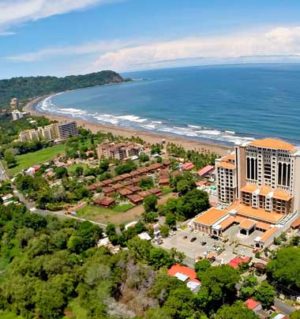
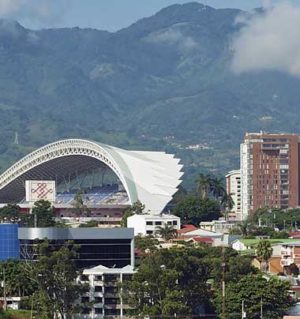
Although Costa Rica is smaller than the majority of the states in the U.S., it offers a variety of interesting and geographically different areas for exploring. On my monthly relocation/retirement tours I am often asked about different areas of Costa Rica. I explain that in reality there are “many Costa Ricas.” There is a famous book about Mexican by Leslie Byrd Simpson Entitled “Many Mexico’s.” It was required reading when I was a student of Latin American Studies at the University of California. The book talks about all of the regional and geographical differences that are found in Mexico. Costa Rica is not nearly as large as Mexico but there a lot of markedly different areas with hundreds of micro climates. So, if you choose to move here you can spend your free time exploring all of the beautiful parts of this spectacular country.

I have lived here nearly 30 years and there are still a few nooks and crannies I have not seen. In Costa Rica you can explore the miles of beautiful coastline on both the Pacific and Caribbean coasts. There are also rainforests, lakes, volcanoes, mountain areas, hot springs, breath taking waterfalls and other natural wonders worth checking out. Some go so far as to say that Costa Rica is a “nature lovers Disneyland.” Combine all of the country’s natural beauty with a multitude of outdoor activities from which to choose and you really have no excuse for being bored during you retirement years.

On my retirement tours we visit some of the most beautiful areas of the country with some of the most breathtaking views you will ever see. The mountains near the Dominical area resemble a tropical Big Sur and really have to be seen to be believed. I can venture to say that the sunsets viewed from the Hotel Mariposa high above Quepos, and from the Hotel Villa Caletas outside of Jaco beach are right up there with the most spectacular natural wonders of the world.

Even if you are the indoor type, there are plays, scores of clubs, expositions, museums, excellent shopping and other events  to keep you entertained. Costa Rica is a small country but as I have said before, “it has something for everyone and everything for someone.” Enjoy!

Those post 2002ers or post-twothousand-and-twoers

Starting in 2002 a whole new wave of people started to move here.

Starting in 2002 a whole new wave of people started to move here.

I just coined the phrase “Post 2002ers” to describe a new breed of American who has moved here since 2002. For years Costa Rica attracted nothing but eccentric foreigners, retirees, dropouts from the U.S., those looking for a post hippie paradise, people on the lamb for one reason or another, (alimony debts, etc.) some strange characters and a few brave entrepreneurs.

Starting in 2002 a whole new wave of people started to move here. This was probably due to Costa Rica’s growing international reputation, a boom in tourism, people looking for opportunities, the coming of age of the Baby Boomers but most of all the ability to use the Internet from abroad to promote businesses here. Whatever happened, a new group of people started to move here and set up shop. Many of them heard about the real estate boom and started real estate offices. Others built spec homes. While other people started to work in tourism. We even had one woman who was into witchcraft and black magic who tried to start a business. Anyway a whole cast of characters from every walk of life came here including criminals and con men. Don’t get me wrong, a lot of great people were part of this new wave and have contributed immensely to Costa Rica.

The funny part is that many of these newbies that went into business here weren’t even legal residents but tourists. Unfortunately government control is lax in this area.  On top of that, since you don’t need a license to sell real estate in Costa Rica, not only were these people in the country illegally but they were selling property without a license because of the lack of regulation here. I have  a realtor friend who calls them carpet baggers.  Other people from this group started tour companies without a license from the tourism board (ICT), again due to a lack of enforcement by the government. Many started online business from here to lure naïve  Americans into their clutches. Most of these new wave entrepreneurs were not dishonest but lacked the legal credentials and experience to provide first-rate services. The Internet played a huge role in giving them credibility. Fortunately, many have fallen to the wayside but some have managed to survive. Sadly, people seem to think that just by moving here the are qualified to provide certain services.

Once again,  NOT everyone who moved here was incompetent, unscrupulous or illegally working under the table.  But we did and still do have our fair share of these characters from the post-2002 group.

I only write these type of articles to protect the people who take my retirement tours or anyone else gathering information to move here. My object is not to offend anyone. I feel it is my duty to help people NOT leave their “brain on the plane.”

Costa Rica and Latin America should survive the economic crisis so don’t worry about retiring here

As I mention in a previous article the Costa Rican government did not have money invested on Wall Street. Furthermore the country doesn’t huge companies on the verge of bankruptcy like General Motors or Ford. We just don’t have manufacturing of that size. Also, sub-prime loans don’t exist here. Make no mistake about it there will be some trickle down effect here.

Lets’s look at what another expert says about the outlook in Latin America. Latin America will face serious challenges in 2009 – especially tighter credit and cost-cutting – but the region is now in bettershape than it has been during previous crisis and still offers good opportunities, according to Latin America division heads of leading U.S. and European multinationals surveyed by Latin Business Chronicle. “No country anywhere can completely escape the effects of the economic slowdown, even if that country possesses abundant natural resources or enjoys internal prosperity,” says John Slater, vice president for Latin America and the Caribbean for U.S.-based Continental Airlines.

However, several executives also argue that Latin America is in better shape than ever to face the crisis. “Latin America is an “expert” when dealing with crises and moving forward,” says Fernando Garcia, vice president for Latin America for U.S.-based American Power Conversion (APC). “Compared with previous crises originated internally, this time it is a crisis provoked by the international contagion and not by inherent problems in Latin America. In general, Latin American economies are quite healthy and that can speed up a recovery.”

Better prepared

There are two key elements that will help the economies of countries in Latin America face the current economic downturn, argues Hernán Rincón, Latin America president for U.S.-based Microsoft, the world’s largest software producer. The first is that countries in the region have, and are maintaining, sufficient foreign reserves to endure current conditions. Secondly, inflation in the majority of the countries has been stable and under control. “The current economic situation is definitely impacting all industries in the region and throughout the world,” he says. “Nevertheless, Latin America has maintained in recent years good macroeconomic conditions that will allow for a faster recovery from this current environment, compared to previous crisis that have impacted Latin America.”

While there clearly are several challenges that will face companies operating in Latin America in 2009, tighter credit tops the list, according to our survey. “The biggest challenge facing many companies in Latin America will be access to credit,” says Leo Rodriguez, president of Latin America for U.S. based Emerson and Emerson Process Management.

Written by; JOACHIM BAMRUD,
Latin American Business Chronicle

Who would consider retirement in Panama or Mexico?

The intention of this info. below is to inform potential retirees of the risk of living in possible risks of living in Panama or Mexico. Mush has been written about the increase in crime in Costa Rica but this article should open your eyes about other countries in the region.

Panama

This is one retirees experiences there.

“One of the reasons I want to move from Panama is that my wife is afraid to leave the house because of the rapidly rising crime rates, especially the murders and killings that saturate the television stations every night.  It has been said that the largest number of assassinations never make it to the news room because the government is covering up in order to protect the image of Panama as a retirement paradise.  Another is the incredible deterioration in the quality of life in the capital city in the last five years.  I have neighbors who are extremely inconsiderate of their co-owners and insist on making life difficult for others in their pursuit of self satisfaction, “the world be damned, I want mine” attitude.  You can call it “juega vivo” to the extreme. It gets tiring after a while to have to be fighting the service providers such as the banks, cable companies, phone companies to keep them from abusing their customers with incompetent service.  It is almost as if it were a national obligation to stick it to the other guy lest you be considered…..what is the term?  You are not fighting tooth and nail to exercise one upmanship on all with whom you come in contact throughout the day to day dealings that are required. This is especially true when you see the maniacs driving on the roadways of the capital. They could care less who gets hurt because of their negligence.”

The country beginning with the government from the highest to lowest level is totally corrupt.  The business sector probably less so. That isn’t to say that there are no honest people, there are but they have no power to make changes.  It isn’t hard to imagine that if improvements are not made in reducing corruption, the consequences of political upheaval will make living here more unbearable.  Most Anglos do not follow the news because their Spanish is not good enough and are not aware of what is going on. I, fortunately, am fluent in the language, read it and therefore do notice the ongoing coverups. “

I hope this satisfies some of the curiosity as to why I would want to leave. I sincerely hope for the sake of the future Panamanians, that this can be turned around.

Mexico

Mexico is in bad shape

Associated Press

Indiscriminate kidnappings. Nearly daily beheadings. Gangs that mock and kill government agents.
This isn’t Iraq or Pakistan. It’s Mexico, which the U.S. government and a growing number of experts say is becoming one of the world’s biggest security risks.
The prospect that America’s southern neighbor could melt into lawlessness provides an unexpected challenge to Barack Obama’s new government. In its latest report anticipating possible global security risks, the U.S. Joint Forces Command lumps Mexico and Pakistan together as being at risk of a “rapid and sudden collapse.”
“The Mexican possibility may seem less likely, but the government, its politicians, police and judicial infrastructure are all under sustained assault and pressure by criminal gangs and drug cartels,” the command said in the report published Nov. 25.
“How that internal conflict turns out over the next several years will have a major impact on the stability of the Mexican state.”
Retiring CIA chief Michael Hayden told reporters on Friday that that Mexico could rank alongside Iran as a challenge for Obama — perhaps a greater problem than Iraq.
The U.S. Justice Department said last month that Mexican gangs are the “biggest organized crime threat to the United States.” National security adviser Stephen Hadley said last week that the worsening violence threatens Mexico’s very democracy.
Homeland Security Secretary Michael Chertoff recently told The New York Times he ordered additional border security plans to be drawn up this summer as kidnappings and killings spilled into the U.S.
The alarm is spreading to the private sector as well. Mexico, Latin America’s second biggest economy and the United States’ third biggest oil supplier, is one of the top 10 global risks for 2009 identified by the Eurasia Group, a New York-based consulting firm.
Mexico is brushing aside the U.S. concerns, with Interior Secretary Fernando Gomez-Mont saying Wednesday: “It seems inappropriate to me that you would call Mexico a security risk. There are problems in Mexico that are being dealt with, that we can continue to deal with, and that’s what we are doing.”
Still, Obama faces a dramatic turnaround compared with the last time a new U.S. president moved into the White House. When George W. Bush was elected in 2000, the nation of 110 million had just chosen Vicente Fox as president in its fairest election ever, had ended 71 years of one-party rule and was looking forward to a stable, democratic future.
Fox signaled readiness to take on the drug cartels, but plunged them into a power vacuum by arresting their leaders, and gangs have been battling each other for territory ever since.
Felipe Calderon, who succeeded Fox in 2006, immediately sent troops across the country to try to regain control. But soldiers and police are outgunned and outnumbered, and cartels have responded with unprecedented violence.
Mob murders doubled from 2007, taking more than 5,300 lives last year. The border cities of Juarez and Tijuana wake up each morning to find streets littered with mutilated, often headless bodies. Some victims are dumped outside schools. Most are just wrapped in a cheap blanket and tossed into an empty lot.
Many bodies go unclaimed because relatives are too afraid to come forward. Most killings go unsolved.
Warring cartels still control vast sections of Mexico, despite Calderon’s two-year crackdown, and have spawned an all-pervasive culture of violence. No one is immune.
Businesses have closed because they can’t afford to pay monthly extortion fees to local thugs. The rich have fled to the U.S. to avoid one of the world’s highest kidnapping rates. Many won’t leave their homes at night.
The government has launched an intensive housecleaning effort after high-level security officials were accused of being on the take from the Sinaloa cartel. And several soldiers fighting the gangs were kidnapped, beheaded and dumped in southern Mexico last month with the warning: “For every one of mine that you kill, I will kill 10.”
But the U.S. government is extremely supportive of the Mexican president, recently handing over $400 million in anti-drug aid. Obama met briefly with Calderon in Washington last week and promised to fight the illegal flow south of U.S. weapons that arm the Mexican cartels.
While fewer Americans are willing to drive across the border for margaritas and handicrafts, visitors are still flocking to other parts of Mexico. And the economy seems harder hit by the global crisis than by the growing violence.
The grim assessments from north of the border got wide play in the Mexican media but came as no surprise to people here. Many said the solution lies in getting the U.S. to give more help and let in more migrant workers who might otherwise turn to the drug trade to make a living.
Otherwise the drug wars will spill ever more heavily into America, said Manuel Infante, an architect. “There is a wave of barbarity that is heading toward the U.S.,” he said. “We are an uncomfortable neighbor.”

Who may not be a candidate for Living or Retiring in Costa Rica

Before I go any further, I want to emphasize the the two examples below do not include all woman. I know many single woman who have moved here and had happy, productive and successful lives.

I have two single women friends who live in the States. One is in her 60s and the other in her early 70s. Both are retired and lead very active lives in California and Washington State respectively.  They have visited Costa Rica on several occasions and are amazed by the country’s beauty. They have even entertained the idea of moving here.

We  talked at length about the prospect of relocating and both of my friends decided in the end  that they were better of where they were presently living. One is very involved in ceramics and painting and lives five minutes away from San Francisco’s De Young Museum where she is involved in many activities. Costa Rica does have a couple of museums, but not on the scale of the De Young. My friend would never be happy unless she had access to the amount of culture a city like San Francisco offers.

My other friend live near Seattle, Washington and is also very active and involved with numerous organizations. She is a serious student of yoga and has about 15 schools in the area from which to choose. Gourmet cooking is another one of her hobbies and there are certain ingredients and classes she could never find in Costa Rica.

On top of all of this both women have expressed the desire to get involved romantically if they moved to Costa Rica. The paragraph below pretty well sizes up the odds of having a successful relationship in Costa Rica for a woman in any age group.

The following is from the 15th edition of my guidebook, “The New Golden Door to Retirement and Living in Costa Rica.”

“Ladies will find gentleman admirers if they so desire.  Due to machismo, Costa Rican men are more flirtatious and aggressive than North American men.  Most Costa Rican men think foreign women have looser morals and are easier conquests than ticas (Costa Rican women).  Be careful to take time to develop a long-term, meaningful relationship and do not rush things.

As one local expat pointed out, ‘Tico men have the best labia in the world. Labia when used in slang, means ‘rap.’  Costa Rican men are charming, witty, and know how to treat a woman. They can seduce almost any woman, regardless of nationality. I have a few tico friends that could get a woman into their car and to a mirador (lookout) overlooking the city within five minutes of meeting them.’

‘Usually, however, these relationships, if you can call them that, don’t last too long. The conquest is a big part of the tico male’s psyche, and then it’s off to the next one.  Don’t be fooled by these modern-day Casanovas, that is of course, unless you want to.’

Many single middle-aged women have a tough time finding a mate because they cannot compete with the young curvaceous ticas. As one expat woman put it,  ”We just happen to live in a country of traffic-stopping gorgeous women, — all of whom seem to have been raised in the Geisha School of Relating to Men. If you are planning to move here based on some dream of meeting a Ricky Martin or other Latin stud, think again.”
Furthermore, if you do meet a Latin man, he may have a hard time handling an independent American woman. Latin men also like to have a lot of girlfriends on the side. Many Latin men measure their virility by the number of women they can seduce.”