Self-righteous Gringos

rman35lSelf-righteous is defined in the dictionary as “Confident of one’s own righteousness, especially when smugly moralistic and intolerant of the opinions and behavior of others.”

Costa Rica’s popularity as an expat haven has given birth to a whole slew of self-righteous business people over the last eight years. The word got out that the country was one of the best places to live on earth thanks to many authors and the media. After 2002 the Costa Rica seems to have been invaded by hordes of baby boomers, young “wonder boys” and others seeking a new life and the opportunities the country seemingly has to offer. Many foreigners, especially those from the U.S., and Canada, immersed themselves in a variety of enterprises from real estate to tourism.

Over the years many succeeded while others failed. I was lucky to have come to Costa Rica 30 years ago and get a head start on many of these newcomers. I have witnessed the transformation of the country first-hand. In the old days we had a lot of soldiers of fortune, fugitives, eccentrics, people with amazing stories, the pioneers and everything else you can think of before the country really became popular. Now we have a new breed of animal.

Most new kids on the block all are “into something.” Don’t get me wrong! Everyone has the right to pursue their business and/or retirement dreams. What leaves a bitter feeling in my mouth is the self-righteousness that many of the new guys proclaim. You look at those who have put up websites and they virtually claim to be the only savior or Moses leading you to the promise land. They all have the “real scoop” or lowdown on the country. I guess that is part of capitalism and competition but kind of strikes me funny. Many of these people have only lived here a few years and purport to know it all. Experience is everything in life. It makes one wiser. That’s why I get a kick out of those foreigners who claim to know it all.

As one Costa Rican put it,”Leave the S.C.C . (Second Coming of Columbus) syndrome at home. No matter what you think of us, we do not need another European-type to come save us from ourselves or to help civilize us.”

I am not making this up but have had the chance to observe this phenomenon up close over the last few years. Human behavior is indeed strange and expatriates behavior is even stranger. Someday a sociologist should do a study on this topic.

I met one guy who was a real number. The first time I talked to him he claimed to be ex-military and a corporal. Over the years his rank amazingly increased to coronel. Indeed Costa Rica is a magical country.

In my retirement books and on my tours I go into detail about the local Costa Rican culture and how foreigners adjust to it including their behavior. I feel my clients need to know this.

San José to have its Own China Town

As part of a massive urban renewal project and in an effort to bring more people back to downtown San Jose, a Chinatown will be created. The Barrio Chino or China Town will be located between avenidas (avenues) 2 and 14 and will be about two acres or 8,300 square meters in size when completed. It will also feature a pedestrian mall in place of the existing city street. The entrance to the area will feature a large oriental style arch.

The area already boasts a couple of oriental restaurants, supermarkets and other businesses.
Read more…

New Real Estate Guidebook

It is with great please that I announce the release of the long-awaited and overdue “Christopher Howard’s Guide to Real Estate in Costa Rica.”

Why was this book written?

Guide to Real Estate in Costa Rica

Guide to Real Estate in Costa Rica

Costa Rica’s natural beauty has been attracting tourists for years. Now retirees and investors are flocking to the country. It seems that almost everyone who moves here becomes enamored with Costa Rica and wants to own a piece of paradise. Because of this Costa Rica was voted one of the top five real estate markets in the world in 2006. However, in order to invest profitably and safely in Costa Rican real estate everyone needs to have the correct information about the process and proceed cautiously every step of the way.

Purchasing real estate in Costa Rica is not for the feint of heart. Many have made money while others have lost their shirt. Realtors don’t need a license to operate here, so potential buyers have to be very careful with whom they deal. It is sort of like the wild west at times because of a lack of regulation and frontier mentality. However, with the correct information and guidance you can make a good purchase and find the home or property of your dreams.

The purpose of this carefully researched book is to provide investors with everything they need to be successful in Costa Rica’s real estate market. This one-of-a-kind guide contains over 500 carefully researched pages and took over three years to write. Virtually everything is covered from A to Z and it will answer all of your questions. The book covers: how and where to find property, how to find out what it is worth, due diligence, how to make an offer, how to finalize the sale, getting permits, financing including using your IRA, legal ramifications, building a home, doing a small development, where to get the best help from professionals in all fields, selling a home, how to do business in Costa Rica, a list of resources and contacts and everything else needed to purchase property the right way.

Those who worked on and wrote the book aimed to provide an objective guide to buying real estate in Costa Rica. One writer is a professional journalist with years of experience at the top financial media company Bloomberg. The other writer has been a newspaper reporter and independent journalist. Neither of the writers are involved in selling real estate in Costa Rica. This guide is based on more than 100 interviews with experts in real estate across the country and from many different countries.

The book was published and written under the watchful eye of renowned author Christopher Howard who has lived in Costa Rica for 30 years and is a Costa Rican citizen. He is the most read authority on the country, has appeared on the NBC Today Show and CNBC World News and has published two perennial bestsellers: “The New Golden Door to Retirement and Living in Costa Rica” (16 editions) and the one-of-a-kind “The Guide to Costa Rican Spanish”.

To order the book go to amazon.com or see www.officialguidetocostaricanrealestate.com

Soccer, Soccer and More Soccer!

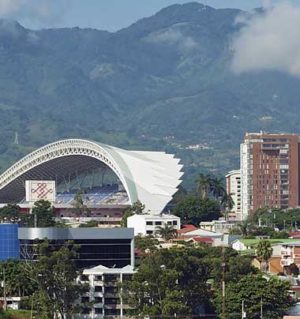
EGIPTO FÚTBOL MUNDIAL SUB-20Costa Rica is a country of soccer fanatics. On Tuesday I watched Costa Rica’s youth team play in the World Junior Cup against a powerful Brazilian team. Both teams had played in an earlier match with Brazil winning 5-0. This time around Brazil had their work cut out for them. Costa Rica put up a valiant fight in this semi-final match. They only lost by a score of 1-0. Next week they will play for third place in the tournament.

Last night everything was at stake for the National team or “Sele” as they call it here. This game was for “all of the marbles.” A do or die game for Costa Rica against the United States. Costa Rica could not tie. They had to emerge victorious. During the first half of the game Costa Rica jumped out to a surprising 2-0 lead. However, things changed in the second half. The U.S. Scored once and then again with only 30 seconds left in the game. The Ticos were heartbroken! The team had the game won only to blow it. The tie virtually eliminated Costa Rica from participating in the 2010 word cup of soccer, soccer’s Super Bowl.

I viewed the game at the Fiesta Casino with some friends including my lovely girlfriend. I wore my Costa Rica soccer jersey like many of the other spectators. Although I am originally from the United States I really wanted Costa Rica to win to assure their participation in the World Cup. Unfortunately it didn’t happen.

I really enjoy getting together with my friends to watch soccer games and other sporting events. If you decide to live or retire in Costa Rica you most certainly will find some interesting activity to get involved with to keep you busy and happy and to make new friends.

Things to Think About Before Moving to A New Country or Making Foreign Investments

checklist

  • What is required to become a legal resident? Can I meet these requirements? What is the cost? How often does residency have to be renewed, what are the conditions of renewal and what is the cost?
  • What is required to visit, or stay while I’m waiting for residency?
  • What is the political situation? How stable is the country?
  • Weather — Will I like the weather year-round?
  • Income taxes — Will I be taxed on income brought into the country? — Am I allowed to earn income in the country? If yes, how is it taxed?
  • Other taxes — Sales tax, import duties, exit taxes, vehicle taxes, etc.
  • How much will it cost in fees, duties and import taxes to bring my personal possessions into the country— cars, boats, appliances, electronic equipment, etc.?
  • Rental property — How much? Availability?
  • Purchase property — property taxes, restrictions on foreign ownership of property, expropriation laws, building regulations, squatters rights, etc. Is there a capital gains tax?
  • Communications — Are there reliable phone and fax lines, cellular phones, beepers, connections to Internet and other computer communication services? Is there good mail service between the country and the rest of the world? Are there private express mail services such as DHL, UPS and FedEx? Are there local newspapers, radio and TV in a language I will understand? Is cable or satellite TV available?
  • Transportation — How are the roads? Are flights available to places I will want to go? How are the buses and taxis ? How costly is it to travel to and from other international destinations?
  • Is it difficult for friends and family to visit?
  • Shopping — Are replacement parts available for the items I have brought from home? If so, what are the costs? If not, how much will it cost to import what I need?
  • Are the types of food to which I am accustomed readily available in both markets and restaurants?
  • If I have hobbies, are clubs, supplies and assistance available?
  • What cultural activities are available — (art, music, theater, museums, etc.)?
  • What entertainment is available— (sports, movies, nightclubs, dancing, etc.)?
  • What recreational facilities are available? (golf courses, tennis, health clubs, recreational centers, parks, etc.)?
  • If I like the beach, are good beaches available? Can they be reached easily? What is the year round temperature of the water?
  • What is the violent crime rate? Minor crime (theft, car and house break-ins)? What support can be expected from the police? Are the police helpful to foreign residents?
  • How do local residents treat foreign visitors and residents?
  • What are the local investment opportunities like? Is there any consumer or protective legislation for investors? What return can I expect from my investments?
  • Is the banking system safe and reliable? Can banks transfer funds and convert foreign currency, checks, drafts, and transfers? Are checking, savings and other accounts available to foreigners? Is there banking confidentiality? Is there a favorable rate of exchange with the U.S. dollar?
  • Are good lawyers, accountants, investment advisors and other professionals available?
  • How difficult is it to start a business? What kinds of opportunities are there?
  • How is the health care system? Is it affordable? Do they honor U.S. and Canadian health insurance? Are there any dangerous diseases, and if so, does the local health care system address the problem? What is the quality of hospitals, clinics, doctors and dentists? What is the availability of good specialists?
  • How is the sanitation? Can I drink the water? Do the restaurants have good sanitation standards? Are pasteurized milk and other dairy products available? Do meat, fish and vegetable markets have satisfactory sanitary standards?
  • If I am interested in domestic staff, what is the cost of cooks, housekeepers and gardeners, etc.? Is the local help reliable? What regulations are involved in hiring employees? What are employers’ responsibilities to workers?
  • What legislation is there to protect foreign residents? What rights do foreign residents have in comparison to citizens?
  • What natural disasters are there — hurricanes, tornadoes, typhoons, earthquakes, droughts, floods?
  • Can pets be brought into the country?
  • Is there religious freedom?

*Courtesy of the Association of Residents of Costa Rica